

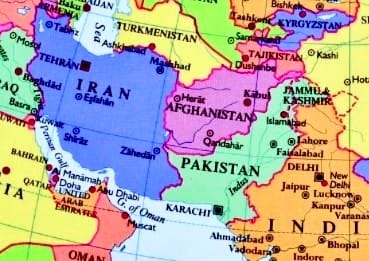
Fractured Lands-1 ...The Unraveling Bonds of Pakistan, Afghanistan, and Iran.
Where caravans once whispered unity, borders now scream division...

This is part 1 of the trilogy: Fractured Lands
The ancient lands of Pakistan, Afghanistan, and Iran remain eternally intertwined through history's golden loom, where threads of language and collective memory weave a vibrant tapestry alive with caravan echoes, poets' verses, and the murmurs of fallen empires. From the Achaemenid dawn when Cyrus' imperial strides crossed paths with Kushan monarchs to the Silk Road's thriving lifelines that transported more than mere commodities - the very essence of civilization between Balkh, Isfahan and Taxila - these territories have shared bonds transcending physical terrain. The Persian tongue, vessel of Rumi's divine raptures and Hafez's timeless wisdom, once coursed like lifeblood through royal courts and marketplace alleys, its melodic influence forever shaping Urdu's poetic measures and Pashto's warrior cadences, while today the whirling Attan of Peshawar still answers the daf's primal call from Tehran.
Timeworn sentinels - Herat's towering minarets, Multan's luminous shrines, Shiraz's perfumed gardens, stand vigil over memories of borderless artistry and spirituality, when wandering Sufi mystics chanted truth that melted barriers between dunes and peaks, between Turkic horsemen and Tajik villagers. The legendary heroes of Sistan continue their immortal journey through Baloch oral epics, while Nowruz's enduring spirit momentarily heals modern divisions with its ancient promise of renewal. Yet this profound legacy, more enduring than dynasties and preceding cartography itself, now groans beneath contemporary fractures - tribes divided by artificial boundaries, kinsmen alienated through geopolitical machinations. What persists is an indestructible inheritance of shared ancestry and cultural DNA: not merely nostalgia for bygone unity, but a wordless yearning for that sacred fellowship which history once granted, and which destiny might someday restore.
Here are some evocative Persian lines about the historical ties between the subcontinent; Pakistan, Afghanistan, and Iran. These verses capture the spirit of renewal and shared heritage that once bound these regions:
بوی جوی مولیان آید همی
یاد یار مهربان آید همی
The scent of the Muliyan stream returns, and with it, memories of the beloved.
~Ferdowsi, Shahnameh
Context: This line, attributed to King Jamshid’s celebration of Nowruz, symbolizes the return of spring and the nostalgia for unity, a metaphor for the shared cultural roots of the region.
Chaharshanbe Suri Fire Ritual:
سرخی تو از من
زردی من از تو
Take my pallor [sickness]... give me your redness [health]... Chanted while jumping over bonfires during Chaharshanbe Suri.
Context: A Zoroastrian-derived ritual practiced across Iran, Afghanistan, and parts of Pakistan, reflecting ancient ties to fire as a purifier.
Haft-Seen Table Blessing: Traditional Nowruz greeting:
نوروزتان پیروز
سال نو مبارک
May your Nowruz be victorious... Happy New Year!
Context: The Haft-Seen table, with its seven symbolic items, is a centerpiece of Nowruz in all three regions, emphasizing shared agrarian roots.
Rumi’s Ode to Spring:
آمد بهار و سبزه زد هر جانب
گویی که لب ز خنده بگشادست
Spring has come, and greenery sprouts everywhere... as if the earth has opened its lips in laughter.
Context: Rumi’s poetry, born in Balkh (modern Afghanistan), resonates across Persian-speaking lands, embodying the unity of nature and culture.
خانه تکانی کن برای جشن بزرگ
بپوش جامه نو، فصل تازه رسید
Clean your home for the great celebration... wear new clothes, a fresh season has arrived.
~ Behrooz Parhami, contemporary poet
Context: Reflects the universal Nowruz preparation (khane tekani), a custom observed from Tehran to Kabul to Lahore.
The verses quoted above, spanning millennia, highlight how Nowruz rituals and poetry transcended borders, weaving a tapestry of shared identity before colonial divisions. The fire rituals, poetic metaphors of renewal, and communal feasts (like Sabzi Polo in Iran or Samanak in Afghanistan) are living remnants of this unity.
The borders of nations are drawn in blood, but the ties of people are written in the stars... if only their rulers would look up.
In the days gone by, before winter’s chill tightened its grip, the Koochi Afghans, commonly known as Pawindas, would emerge from the Hindu Kush like figures stepping out of an ancient caravan painting. Their slow-moving procession of sheep, cattle, and camels traced paths between the Hindu Kush to the upper parts of Sindh... older than nations, their arrival heralded by the rhythmic chime of bells and the murmur of barter in local marketplaces. The women, draped in silks that shimmered like captured sunlight, unrolled bolts of fabric in the alleys of cities and towns across Punjab and Khyber Pakhtunkhwa (formerly Sarhad)... their voices weaving commerce into the tapestry of daily life. It was a time when borders breathed, when students still set out for the storied madrasas of Mashhad and the libraries of Istanbul, carrying back not just knowledge but the living thread of Persian… a language that once flowed as freely as the Indus through our schools and courts until the mid-1970s.
And who can forget the romance, mystery and the folklore of the Koochi tribes, those wandering spirits who traced their ancient paths between the Afghan heartlands and the Punjab plains?
A centuries-old symphony of movement and tradition, now fractured by the cruel tides of history; the Soviet invasion, the Afghan Jihad, and its bloody aftermath. Oh, how callously the colonial powers, the tyrants, and aggressors have trampled upon civilizations, leaving in their wake only the ruins of cultures that once thrived.
The world is too much with us; late and soon,
Getting and spending, we lay waste our powers;
Little we see in Nature that is ours;
We have given our hearts away, a sordid boon!
Wordsworth’s lament rings true across time, for what is lost is not merely a way of life but a fragment of humanity’s soul.The land itself seemed to remember older harmonies. The scent of the Muliyan stream, immortalized by Ferdowsi, lingered in the collective memory like a half-forgotten dream of unity. Around Nowruz bonfires, voices rose in the old Zoroastrian chant; Take my pallor, give me your redness… a ritual that leapt across modern frontiers, from Tehran’s alleyways to Kabul’s foothills. Rumi’s verses, born in the Afghan dawn, rolled effortlessly off tongues in Qissa Khwani Bazaar, where the earth’s laughter at spring’s arrival needed no translation. These were not mere traditions but the quiet, stubborn proof of a shared pulse beneath the skin of three nations.
Then the knives came… The Durand Line, that colonial scalpel, slit through tribal lands, leaving a wound that never healed. The British Empire, in its relentless pursuit of control, carved through the living flesh of Pashtun tribal lands with the Durand Line in 1893. This artificial boundary, never accepted by Afghanistan, became a festering wound. When Pakistan emerged in 1947, it inherited this contested frontier, and Kabul’s refusal to recognize it set the stage for decades of mistrust. Afghanistan’s early opposition to Pakistan’s UN membership, coupled with its support for Pashtun separatists, deepened the rift. Iran, under the Shah, initially stood with Pakistan as a Cold War ally, but the revolution of 1979 reshuffled loyalties, replacing secular alliances with ideological divides.
The Cold War turned this land of rugged mountains and whispering bazaars into a chessboard, its squares marked by the gambits of distant powers. Strategists hunched over maps in Washington, Moscow, and beyond, molding the mujahideen into pawns and madrasas into factories of fury. The jihad that bled the Soviets dry left behind a wasteland where silk sellers once walked, where the very word Afghan curdled in the mouth, a synonym for suspicion. America and Saudi Arabia funneled arms through Pakistan, while Iran stoked its own factions, deepening the sectarian cracks that would splinter the land.
Then came new betrayals… After 9/11, Pakistan, caught between American demands and its own shadow games, played both sides in Afghanistan, breeding resentment that festered like an old wound. India and the U.S. moved covertly, their proxies groomed by intelligence agencies; CIA, RAW... each move deepening the labyrinth. Now, with the Taliban once more ruling Kabul, old tensions flare anew: Pakistan accuses them of sheltering cross-border militants, while Iran and Pakistan trade barbs over Baloch insurgents, their rivalry sharpened by water disputes and the relentless calculus of power. The region still trembles under the weight of games it never chose to play.
Tyranny and treachery know no bounds… The Afghan jihad brought only death, destruction, and chaos, creating and imposing ethnic and racial rivalries... so much so that lately, the Pakistani government has resorted to the forced deportation of third-generation Afghan refugees, many of whom have known no home but Pakistan... adding another layer to the never-ending post 9/11 tragedy. Everything aligns perfectly with west's scheme to create rifts and deepen fault lines, systematically engineered by foreign powers with the help of a compromised ruling elite over the past decades.
These mass expulsions will deepen Afghanistan’s humanitarian crisis, further destabilizing a nation already crippled by isolation and economic collapse. The return of hundreds of thousands of refugees, many without homes or livelihoods, risks fueling recruitment for militant groups, exacerbating the very insecurity Pakistan seeks to contain. Afghanistan, unable to absorb this influx, may see increased internal displacement, pushing desperate families toward extremism or crime. The human cost will be immense, and the political fallout, rising anti-Pakistan sentiment among Afghans, could harden the Taliban’s stance, making future cooperation even more unlikely.
Could this spiral into outright war? It seems improbable as both Pakistan and Afghanistan are too fractured, too economically broken, to sustain a full-scale conflict. But the embers of resentment glow hot. Skirmishes along the Durand Line, tit-for-tat airstrikes, and proxy battles through militant groups will continue. Iran, watching from the west, may exploit these divisions, further complicating the region’s already tangled web of alliances and enmities.
The story of these lands is one of lost unity, of bonds severed by empires and exploited by outsiders. The people; Pashtun, Baloch, Persian… remember a time when borders were fluid, when caravans moved freely between Herat, Peshawar, and Isfahan. Now, barbed wire and checkpoints mark where kinship once flowed. The future, it seems, will be written not in reconciliation, but in the slow, grinding erosion of what little trust remains.
This is the true cost of empire, not just the drawn borders, but the severed memories. The West’s interventions did not merely topple regimes; they erased the quiet understanding that once let a Baloch herder share water with a Sistani farmer, that let a Persian couplet recited in Peshawar meet with nods rather than blank stares. The rivers still run toward the same sea, but the men who drink from them have been taught to call one another strangers.
Now, the Pawindas no longer come. Their youth might have traded their cattle and camels with kalashnikovs and the Pawinda trails lie silent, their winter migrations severed by barbed wire and bureaucracy. The same Pakistani streets that once absorbed their dialects and haggled over their silks now hunt their grandchildren, those born within these borders but orphaned by policy.
The silk has frayed to dust. But walk the Khyber at dawn when the light slants gold, and you’ll hear it: the whisper of camels that never left, the echo of a poet who still claims no nationality but earth. The borders were always illusions. The mountains knew this. The rivers knew. Only we, the children of maps, pretended otherwise.
Yet the land keeps its own ledger. The Hindu Kush still catches the same snowmelt that feeds Punjab’s fields. The Nowruz fire, though dimmed, still flickers in cellars where old men teach children the forbidden songs. The tragedy is not that these bonds were broken. All empires fall but that we’ve been made to forget they ever existed.
And history has a way of outlasting empires. Perhaps, someday, the people of these fractured lands will rediscover what was stolen from them; not through the whims of kings or the schemes of foreign powers, but through the stubborn, unyielding memory of shared blood and shared earth. They drew lines on maps, not knowing that rivers do not stop for borders, that songs do not halt at checkpoints, and that the wind carries the same dust over all their fences.
They will tell you this is the way of the world; kingdoms rise, nations fall. But ask the wind that carries the same pollen across their checkpoints, ask the cranes that winter in Sindh but nest in Siberia, whether they’ve seen a single blade of grass that grows differently for a passport’s sake.
For what are borders but illusions? The land remembers what men forget; that before there were nations, there were only people, and before there were wars, there was only home.
نیل کے ساحل سے لے کر تابخاک کاشغر~
…To be concluded.
Also Read: Fractured Lands-3 ...The Children of Nowhere and the Unforgivable Silence
To view earlier posts, please scroll down. I welcome your reflections in the comments section below.